Watercolor Vintage Muscle Cars Clipart: A Practical Evaluation
The intersection of automotive history and artistic expression has given rise to a specific niche in digital design assets: Watercolor Vintage Muscle Cars Clipart. These digital illustrations combine the raw power and iconic silhouettes of American muscle cars from the 1960s and 1970s with the soft, textured aesthetic of watercolor painting. For designers, crafters, and content creators, this style offers a unique visual language that differs significantly from standard vector graphics or photorealistic renderings. Understanding the characteristics, applications, and limitations of these assets is essential for determining if they align with your specific project requirements.
Defining the Aesthetic and Format
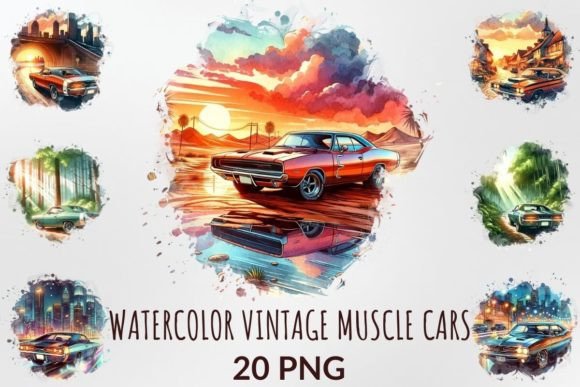
Watercolor Vintage Muscle Cars Clipart typically refers to a collection of high-resolution images, often distributed in PNG format, featuring classic automobiles rendered with simulated watercolor techniques. Unlike traditional clip art, which may rely on flat colors and hard edges, these images utilize transparency, color bleeding, and paper-texture effects to mimic hand-painted artwork. The subject matter focuses on "muscle cars"—vehicles defined by high-performance engines and aggressive styling—such as the Ford Mustang, Chevrolet Camaro, Dodge Charger, and Plymouth Barracuda.
The defining characteristic of this style is its organic feel. The edges of the vehicles are often soft rather than sharp, and the color palettes tend to be rich yet slightly muted, evoking a sense of nostalgia. When these files are provided as PNGs with transparent backgrounds, they allow for seamless integration into various design layouts without the need for complex background removal tools. This format is particularly relevant for sublimation printing, where the image is transferred onto physical goods like mugs, t-shirts, and mousepads.
Reasons for Interest and Primary Applications
Creatives are drawn to this specific style for several practical reasons. First, it bridges the gap between technical precision and artistic flair. A photorealistic car image can sometimes feel too sterile for certain projects, while a cartoonish vector might lack the gravitas required for an automotive theme. Watercolor illustrations strike a balance, offering a sophisticated look that appeals to enthusiasts who appreciate both engineering and art.
Common use cases include:
- Sublimation Products: The vibrant yet soft nature of watercolor works exceptionally well on white or light-colored substrates. It is a popular choice for creating personalized gifts, such as custom apparel or home decor items.
- Digital Marketing and Social Media: Brands targeting older demographics or those focusing on heritage and tradition often use these visuals to evoke emotion. They stand out in social media feeds dominated by high-contrast photography.
- Printed Stationery: Invitations, greeting cards, and scrapbooking projects benefit from the whimsical yet mature tone of watercolor art.
- Educational Materials: In history or design courses, these illustrations can serve as engaging visual aids to discuss automotive evolution without distracting from the text.
Benefits and Advantages
The primary advantage of using Watercolor Vintage Muscle Cars Clipart is the immediate addition of texture and depth to a design. Because the artistic style implies a human touch, it can make digital projects feel more personal and less mass-produced. Additionally, the PNG format ensures that the images remain crisp at various sizes, provided the resolution is sufficient for the intended output.
For those engaged in sublimation, these assets offer a distinct competitive edge. While many sellers offer standard line-art or solid-color car designs, watercolor styles provide a premium look that justifies higher price points for finished products. The transparency of the PNG files also streamlines the workflow, allowing designers to layer these elements over patterns, gradients, or photographs without awkward borders.
Tradeoffs and Considerations
Despite their appeal, there are significant tradeoffs to consider. The most notable limitation is scalability. Unlike vector graphics (SVG or EPS), raster-based watercolor images have a fixed resolution. If a design requires the image to be printed at a very large scale—such as a billboard or a massive banner—the image may pixelate or lose detail. Users must verify the DPI (dots per inch) of the file before committing to large-format prints.
Furthermore, the artistic style dictates the context. Watercolor is inherently soft and somewhat romanticized. It may not be suitable for projects requiring technical accuracy, such as repair manuals, parts diagrams, or performance specifications. The blurred edges and color variations mean that precise lines and measurements are lost, making these assets poor choices for instructional or engineering-focused content.
Situations Where Alternatives Are Preferable
While Watercolor Vintage Muscle Cars Clipart is versatile, it is not a universal solution. Designers should consider alternative asset types based on their specific goals:
- Technical Documentation: If the goal is to explain how a car engine works or to show specific model details, line drawings or CAD renders are superior. They offer clarity and precision that watercolor cannot provide.
- High-Speed Sports Branding: For brands emphasizing speed, aggression, and modern technology, photorealistic images or sleek, metallic vector art often communicate the message more effectively than the nostalgic, soft look of watercolor.
- Variable Data Printing: If a project requires the image to be resized dynamically across thousands of different formats, vector graphics are safer to prevent quality loss.
- Dark Substrates: Watercolor designs often rely on white space and light tones to create contrast. Applying them to dark fabrics or materials via sublimation can result in a washed-out appearance unless the design includes a heavy background overlay.
Practical Decision-Making Insights
To determine if this type of clipart aligns with your needs, evaluate your project against three key criteria: resolution requirements, stylistic consistency, and audience perception.
Resolution Check: Before purchasing or downloading, inspect the pixel dimensions. For print projects, ensure the file is at least 300 DPI at the final print size. If you intend to use the image for web banners or social media posts, lower resolutions may suffice, but always test the image at full screen to check for blurriness.
Style Alignment: Ask yourself if the "vintage" and "hand-drawn" aesthetic supports your brand voice. If your brand is strictly modern and futuristic, the nostalgic vibe of a 1960s muscle car in watercolor may create a cognitive dissonance for your audience. Conversely, if you are selling retro-themed merchandise or running a blog about classic car restoration, this style is likely a strong fit.
Licensing and Usage: Finally, review the license agreement associated with the clipart collection. Some collections restrict commercial use, limit the number of end products (e.g., only 50 physical items), or prohibit resale of the digital file itself. Ensure that the terms allow for the specific application you have in mind, whether it is for a one-off gift or a commercial product line.
Conclusion
Watercolor Vintage Muscle Cars Clipart represents a specialized tool within the broader landscape of digital design resources. It excels in scenarios requiring a blend of nostalgia, artistic texture, and ease of integration, particularly for sublimation crafts and lifestyle marketing. However, its utility diminishes when technical precision or extreme scalability is required. By carefully weighing the aesthetic benefits against the limitations of raster formats and stylistic constraints, creators can make informed decisions about whether these vintage illustrations will enhance their projects or if alternative graphic solutions would better serve their objectives.