Maximizing Creative Impact with Summer Vacation Design Elements
Creating compelling visual content for the summer season requires more than just selecting bright colors; it demands a cohesive set of assets that communicate relaxation, energy, and warmth instantly. For designers, marketers, and hobbyists alike, the challenge often lies in sourcing high-quality graphics that are versatile enough to work across various mediums without losing resolution or stylistic consistency. This is where a curated collection of Summer Vacation Design Elements becomes an invaluable resource. Rather than piecing together disparate images from multiple sources, utilizing a unified bundle allows for a streamlined workflow and a professional finish.
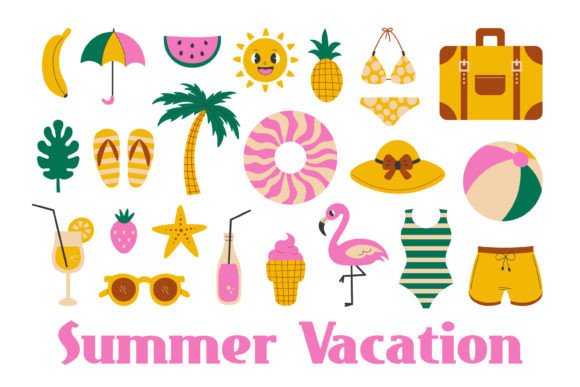
A comprehensive modern colorful summertime beach holiday bundle typically includes a wide array of vector illustrations representing iconic seasonal symbols. These may range from palm trees and flamingos to tropical fruits, sunglasses, ice cream, and swimwear. The utility of such a collection extends far beyond simple decoration. It serves as a foundational toolkit for creating posters, greeting cards, invitations, party decorations, sublimation prints, website headers, social media posts, and scrapbooking layouts. Understanding the specific components and technical specifications of these bundles helps users determine if they are the right fit for their current projects.
Evaluating the Composition of Modern Summer Bundles
When assessing a design package, the variety and quality of individual elements are paramount. A robust collection should cover the essential attributes of summer recreation and relaxation. Common items include refreshing drinks, beach accessories, and clothing that evoke a sense of leisure. The inclusion of both natural elements, such as the sun and palm fronds, and lifestyle items, like sunglasses and ice cream, ensures that designers can create scenes that feel lived-in and authentic.
The distinction between a basic clipart set and a premium Summer Vacation Design Elements bundle often lies in the artistic style and technical execution. Modern bundles favor clean, vector-based illustrations that scale infinitely without pixelation. This is crucial for applications ranging from small social media icons to large-format banners. The use of vibrant, saturated colors typical of tropical themes helps capture attention in crowded digital feeds, while maintaining a balanced aesthetic that does not overwhelm the viewer.
Furthermore, the organization of these elements plays a significant role in usability. A well-structured bundle provides files in multiple formats to accommodate different software preferences and output requirements. For instance, having transparent PNGs allows for easy layering over complex backgrounds, while JPGs with white backgrounds are ideal for quick previews or specific print applications. The inclusion of an EPS file containing all elements offers maximum flexibility for professional designers who need to edit paths, change colors, or resize components within vector editing software.
Technical Specifications and Their Practical Implications
One of the most critical factors in choosing design resources is resolution. A high-quality bundle should offer files at 300 DPI (dots per inch), which is the standard for professional printing. Lower resolution images may appear sharp on screens but can look blurry or pixelated when printed on physical materials like invitation cards or t-shirts. A specification of 5000 x 5000 pixels provides ample room for cropping and resizing without compromising image integrity.
The color profile is another technical detail that influences the final outcome. RGB (Red, Green, Blue) is the standard for digital displays, including websites and social media platforms. If a bundle is provided in RGB, it is optimized for screen viewing. However, users intending to print professionally should be aware that converting RGB to CMYK (Cyan, Magenta, Yellow, Key/Black) may result in slight color shifts. Understanding this tradeoff helps in setting realistic expectations for print projects. For most casual or semi-professional uses, such as home printing or sublimation, RGB files often yield satisfactory results, especially if the printer drivers handle the conversion effectively.
The format diversity within a zip archive—such as 22 PNG elements with transparent backgrounds, 22 JPG square cards, and 1 EPS file—caters to a broad spectrum of users. Beginners may prefer the drag-and-drop convenience of PNGs, while advanced users might leverage the EPS file for custom modifications. This inclusivity makes the bundle suitable for a wide audience, from graphic designers to DIY enthusiasts.
Comparing Bundled Elements vs. Individual Asset Sourcing
Designers often face the decision between purchasing a comprehensive bundle or sourcing individual elements from various marketplaces. While buying single items allows for highly specific curation, it can be time-consuming and costly. Moreover, mixing assets from different artists often leads to inconsistencies in style, lighting, and perspective, which can detract from the professionalism of the final design.
In contrast, a unified Summer Vacation Design Elements collection ensures visual harmony. All illustrations share the same line weight, color palette, and artistic approach. This coherence is particularly important for branding purposes, where maintaining a consistent look across different touchpoints is essential. For example, a travel agency using these elements for their summer campaign will benefit from the uniform aesthetic, which reinforces brand identity across social media posts, email newsletters, and printed brochures.
However, there are scenarios where individual sourcing might be preferable. If a project requires a very niche or unconventional style that deviates from the popular tropical theme, a general bundle may not suffice. Additionally, if a designer only needs one or two specific icons, purchasing an entire bundle might seem excessive. Yet, considering the low cost per asset in a bundle compared to individual purchases, the value proposition usually favors the bundled approach for those who anticipate ongoing summer-themed projects.
Best-Fit Use Cases and Application Strategies
Identifying the right applications for these design elements can maximize their value. Social media management is a primary use case. Platforms like Instagram and Pinterest thrive on visually appealing, seasonal content. Using pre-made elements like flamingos, tropical fruits, and sunglasses allows content creators to produce engaging posts quickly. These assets can be combined with text overlays to announce sales, share travel tips, or promote events.
For the printing industry, sublimation design represents a growing market. The high-resolution PNGs with transparent backgrounds are ideal for creating designs for t-shirts, mugs, and tote bags. The vibrant colors of summer themes translate well onto fabrics and hard surfaces, making them popular choices for merchandise. Similarly, scrapbooking enthusiasts can use these elements to document summer vacations, adding a professional touch to personal photo albums.
Event planning also benefits significantly from such resources. Invitations for pool parties, beach weddings, or summer birthdays can be customized easily using the provided JPG cards or by assembling new compositions from the PNG elements. The ability to mix and match items like drinks, swimwear, and sun motifs enables the creation of unique invites that set the tone for the event.
Limitations and Considerations for Alternative Options
While versatile, a static bundle of vector illustrations has limitations. It does not replace the need for original photography if realism is required. For campaigns that rely on authentic human experiences or specific locations, stock photos or custom photography may be more appropriate. Additionally, because these elements are widely available, there is a risk of overuse. To maintain uniqueness, designers should consider combining these assets with custom typography, unique color adjustments, or additional graphical elements.
Another consideration is the learning curve associated with vector files. While PNGs and JPGs are user-friendly, working with EPS files requires knowledge of software like Adobe Illustrator or Inkscape. Users unfamiliar with vector editing may find themselves limited to the pre-set arrangements unless they invest time in learning these tools. In such cases, sticking to the raster formats or seeking out templates that utilize these elements might be a more practical approach.
Ultimately, the decision to use a Summer Vacation Design Elements bundle depends on the specific needs of the project, the skill level of the user, and the desired output. For those seeking efficiency, consistency, and high-quality visuals for summer-themed content, these bundles offer a compelling solution. By understanding the technical specifications and potential applications, users can make informed decisions that enhance their creative output while saving time and resources.