Vector Lotus SVG Bundle, Hand-drawn: A Practical Guide for Creators
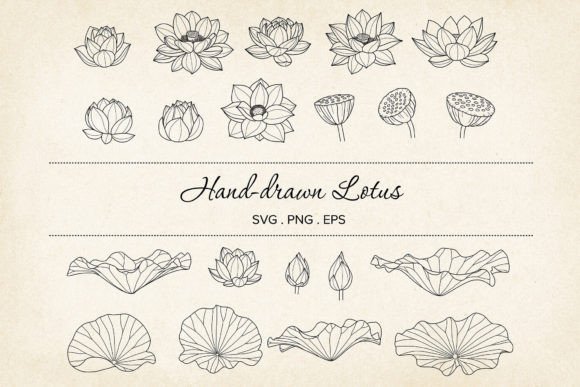
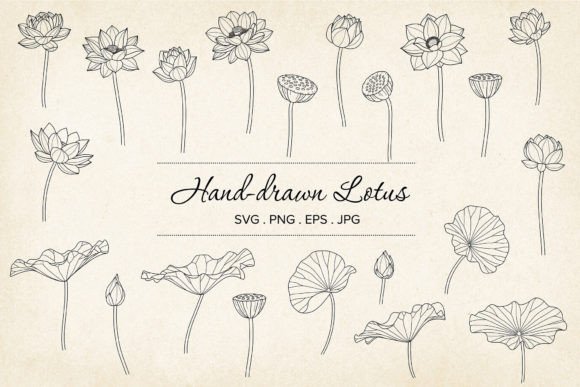
For designers, crafters, and small business owners, finding the right digital assets can make or break a project. The Vector Lotus SVG Bundle, Hand-drawn offers a curated collection of 20 beautiful elements, ranging from fully bloomed flowers and tight buds to intricate leaves and seedpods. These assets are not just decorative; they are functional tools designed to elevate pattern design, wedding invitations, tattoos, planner layouts, and web decoration. However, simply downloading a file does not guarantee a professional result. Understanding how to properly evaluate, integrate, and customize these hand-drawn elements is crucial for achieving high-quality outcomes in your creative work.
Understanding the Value of Hand-Drawn Vector Assets
The appeal of this specific bundle lies in its versatility and the organic nature of the illustrations. Unlike rigid, geometric clip art, hand-drawn vectors carry a sense of movement and texture that resonates well with audiences looking for authenticity. Whether you are designing greeting cards, logos, or sublimation print-on-demand products like mugs, phone cases, paintings, journals, T-shirts, mousepads, or tote bags, these lotus elements provide a flexible foundation.
Because the bundle includes multiple file formats—SVG files for individual elements, PNGs for quick placement, JPEGs for previews, and a single EPS file containing all 20 designs on one page—it caters to various software workflows. This variety allows professionals to scale graphics without losing quality, a critical factor when moving from a digital screen to a physical product. Yet, many users overlook the nuances of these formats, leading to unnecessary frustration during the production phase.
Common Pitfalls When Selecting Digital Downloads
One of the most frequent mistakes creators make is assuming that "vector" automatically means "perfect." While the Vector Lotus SVG Bundle, Hand-drawn provides scalable graphics, the quality of the final output depends heavily on how the source files are handled. A common error is using low-resolution raster versions (like the included JPEGs) for large-format printing. If you intend to print a mural or a large banner, relying on a pixel-based preview instead of the vector data will result in blurry, unprofessional edges.
Another misunderstanding involves licensing and commercial use. Many hobbyists treat free or budget-friendly bundles as unlimited resources. It is essential to verify the specific license terms attached to the download. Using a personal-use-only asset for a commercial product line, such as selling T-shirts on a marketplace, can lead to legal complications and financial penalties. Always read the documentation provided with the download to ensure your intended use aligns with the creator's permissions.
Ignoring File Compatibility and Software Requirements
Technical compatibility is often an overlooked detail until it becomes a problem. The bundle includes an EPS file, which is excellent for professional illustration software like Adobe Illustrator. However, if you are working primarily in web design tools or basic image editors, the EPS format may not open correctly or might require conversion steps that alter the original path data. Similarly, while SVGs are standard for the web, some older cutting machines used for vinyl stickers or decals may struggle with complex SVG paths if they are not optimized for cutting.
To avoid this, test your files in your specific workflow before committing to a full project. Open the SVG in your browser or design tool to check for broken paths or missing layers. Ensure that the hand-drawn lines remain smooth when scaled up. If you plan to use these elements for sublimation on curved surfaces like mugs, remember that the flat vector must be wrapped correctly by your printer software to avoid distortion.
Maximizing Usability Through Proper Customization
The true power of the Vector Lotus SVG Bundle, Hand-drawn is unlocked through customization. A significant mistake is treating these elements as static images that cannot be altered. Because they are vector-based, you have the ability to change colors, adjust stroke widths, and rearrange components to fit your brand identity. For instance, a lotus flower designed in a soft pink might clash with a bold, modern logo palette. Instead of forcing the color to match, use your vector software to recolor the strokes and fills to harmonize with your existing design system.
When incorporating these elements into patterns for fabric or wallpaper, spacing is key. Simply repeating the image can look chaotic if the negative space isn't managed correctly. A better approach is to experiment with different rotations and scales within the pattern maker. The inclusion of separate elements like leaves and seedpods allows you to create balanced compositions rather than repetitive clusters. This attention to detail transforms a generic background into a cohesive, professional design.
Practical Steps for Better Integration
Before integrating these lotus elements into a client project or a product listing, follow these practical checks:
- Verify Scalability: Zoom in to 400% or higher in your editing software. The lines should remain crisp. If they appear jagged, you are likely viewing a rasterized version rather than the actual vector path.
- Check Color Profiles: Ensure your files are set to CMYK for print projects (like T-shirts and tote bags) and RGB for digital displays (like web decoration and phone cases). Converting at the wrong stage can shift colors unexpectedly.
- Organize Layers: The EPS file contains all 20 designs on one page. Before starting, organize these into a library or separate files to streamline your workflow. This prevents accidental deletion or misplacement of specific elements like buds or seedpods.
- Test on Mockups: Never finalize a design without seeing it on a realistic mockup. A lotus design that looks great on a white screen might disappear on a dark gray mug. Use the PNG files for quick mockups to assess contrast and visibility.
Strategic Application for Different Projects
Different projects demand different approaches to using the same assets. For tattoo artists, the clean lines of the hand-drawn style are ideal, but the design must be simplified further to ensure it ages well on skin. Complex shading in the original vector might blur over time, so simplifying the linework is a necessary corrective step.
In contrast, for planners and journal layouts, the focus should be on whitespace and balance. Overcrowding a page with too many lotus elements can make the layout feel cluttered. Use the smaller buds and leaves as subtle accents rather than dominant features. For entrepreneurs creating logos, the challenge is distinctiveness. Since lotus flowers are a popular motif, combining the vector elements with unique typography or abstract shapes is essential to create a memorable brand mark.
Making an Informed Decision
Choosing the right digital asset bundle requires more than just looking at a preview image. You need to consider your technical skills, your end goal, and the specific requirements of your medium. The Vector Lotus SVG Bundle, Hand-drawn is a robust resource, but its effectiveness relies on your ability to manipulate and apply it correctly. By avoiding common pitfalls like ignoring file formats, neglecting color profiles, or failing to customize, you ensure that your final products are polished and professional.
Whether you are a beginner exploring sublimation printing or a seasoned marketer designing a new campaign, taking the time to understand the mechanics of these files will save you time and money in the long run. With proper preparation and a strategic approach, these 20 hand-drawn elements can serve as the cornerstone of countless successful creative projects.